

[vc_row gap=”30″ equal_height=”yes” type=”vc_default” css=”.vc_custom_1495105796691{padding-top: 70px !important;padding-right: 25px !important;padding-bottom: 70px !important;padding-left: 25px !important;}”][vc_column width=”1/2″ css=”.vc_custom_1578745201435{padding-top: 0px !important;padding-right: 0px !important;padding-bottom: 0px !important;padding-left: 0px !important;background-color: rgba(0,0,0,0.04) !important;*background-color: rgb(0,0,0) !important;}”]
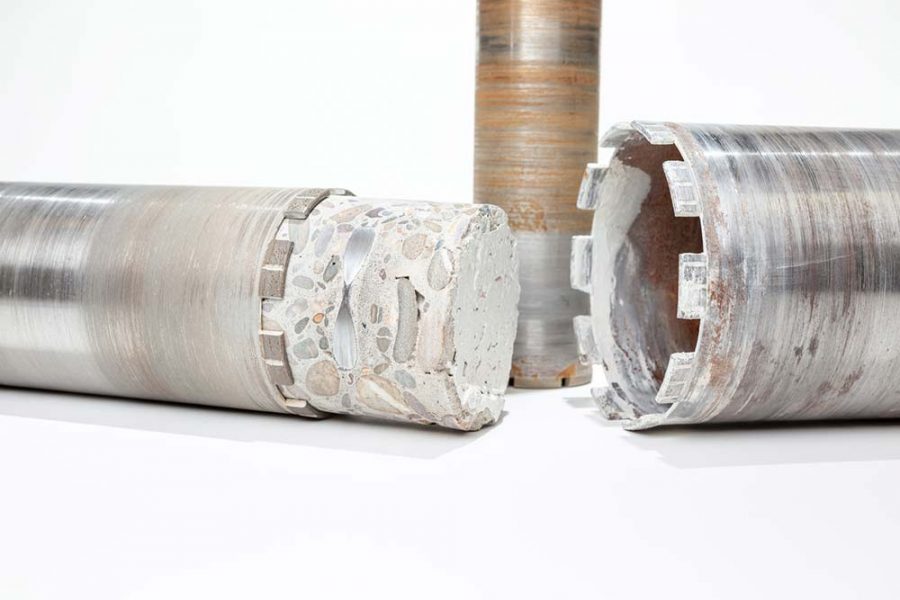
Diamond Drilling
Geotechnical Diamond Drilling differs from other geological drilling in that a solid core is extracted from depth, for examination on the surface. We specialize in Geotechnical Drilling for foundation purposes and shallow exploration drilling for mining purposes.[/vc_column_text]Read More[/vc_column_inner][/vc_row_inner][/vc_column][vc_column width=”1/2″ css=”.vc_custom_1578745232578{padding-top: 0px !important;padding-right: 0px !important;padding-bottom: 0px !important;padding-left: 0px !important;background-color: rgba(0,0,0,0.04) !important;*background-color: rgb(0,0,0) !important;}”]
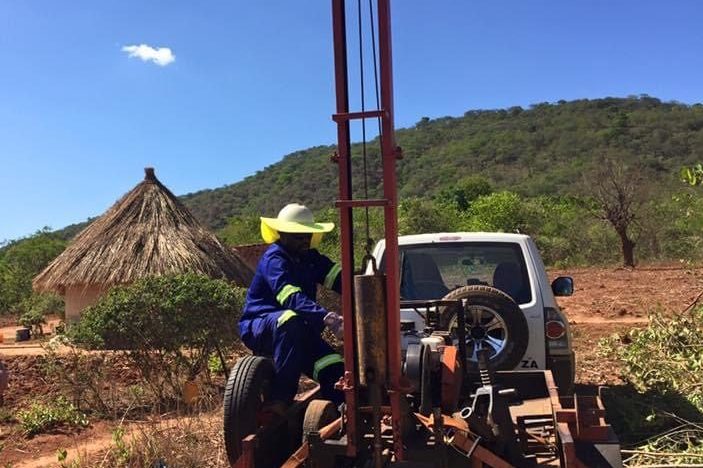
DPSH Testing
The DPSH (Dynamic Probe Super Heavy) dynamic penetration test is a continuous test which consists of counting the number of blows, (N value), needed to drive 30cm lengths of metal bar (N30)
With these tests we obtain the parameter N30, which enables Engineers to calculate the resistance to the dynamic penetration of the point and it is correlated with the principles of geomechanical parameters. This is the best preliminary tests to do on a site to allow Engineers to plan the best means of further investigation.[/vc_column_text]Read More[/vc_column_inner][/vc_row_inner][/vc_column][vc_column width=”1/2″ css=”.vc_custom_1578745346381{padding-top: 0px !important;padding-right: 0px !important;padding-bottom: 0px !important;padding-left: 0px !important;background-color: rgba(0,0,0,0.04) !important;*background-color: rgb(0,0,0) !important;}”]
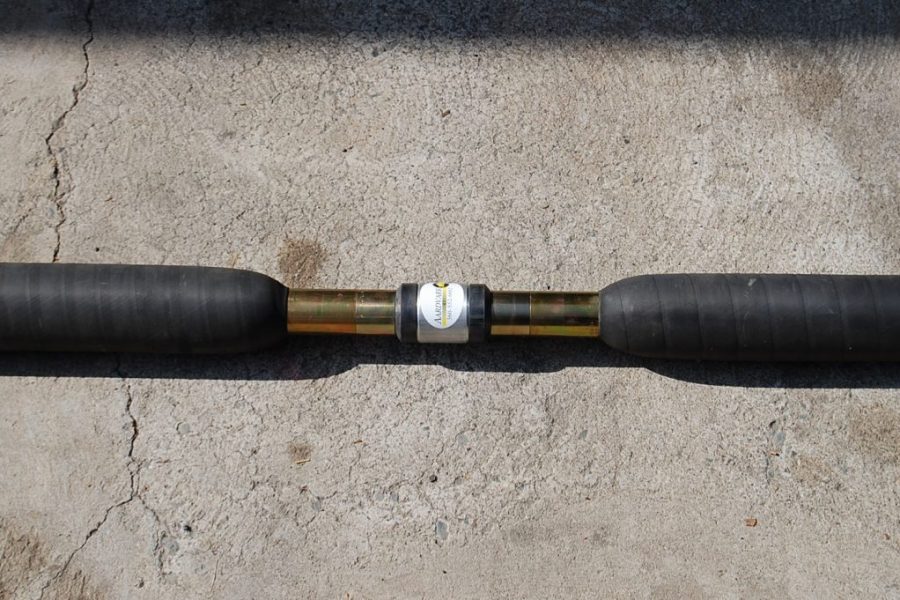
Packer Testing
Packer Testing is a test for measuring the permeability of ground in sections of boreholes. Pneumatic packers have been an increasingly valuable tool for consultants analyzing borehole characteristics. Packers can be used to determine the water quality in discrete zones in both cased and uncased wells. Packers also determine the hydraulic characteristics of distinct zones within a borehole.[/vc_column_text]Read More[/vc_column_inner][/vc_row_inner][/vc_column][vc_column width=”1/2″ css=”.vc_custom_1578745352373{padding-top: 0px !important;padding-right: 0px !important;padding-bottom: 0px !important;padding-left: 0px !important;background-color: rgba(0,0,0,0.04) !important;*background-color: rgb(0,0,0) !important;}”]
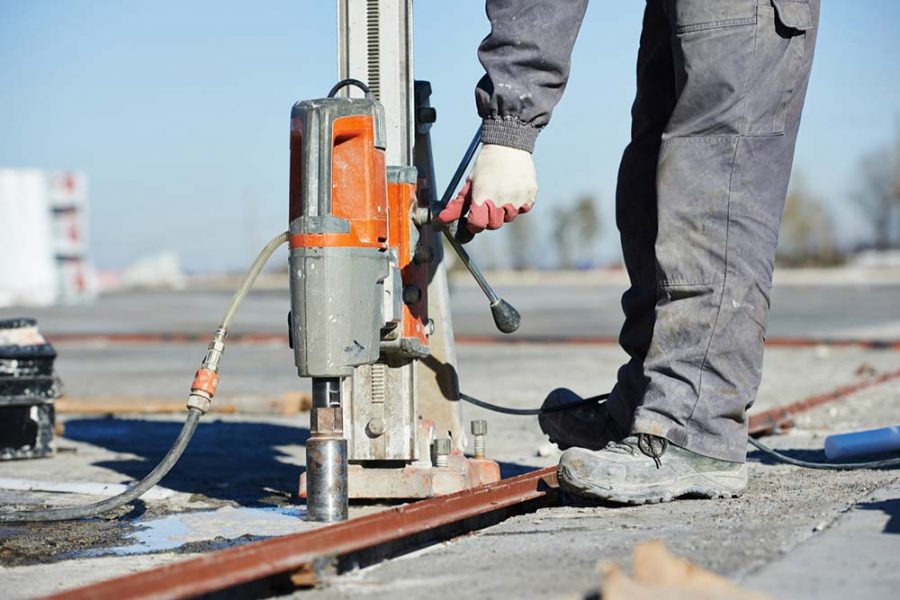
Concrete Core Drilling
Concrete Core Drilling is a rotary drilling process in which rock, cement, asphalt, granite or other extremely hard material, is cut with an annular or round drill bit, to extract a core or cylindrical sample of the drilled material.
Core drilling is also used to create holes or channels for infrastructure such as ducts for plumbing, phone lines, sprinkler systems and electrical wiring.
It is the most effective method of testing concrete as it allows for an undisturbed or intact example of the material.
[/vc_column_text]Read More[/vc_column_inner][/vc_row_inner][/vc_column][vc_column width=”1/2″ css=”.vc_custom_1578745359400{padding-top: 0px !important;padding-right: 0px !important;padding-bottom: 0px !important;padding-left: 0px !important;background-color: rgba(0,0,0,0.04) !important;*background-color: rgb(0,0,0) !important;}”]
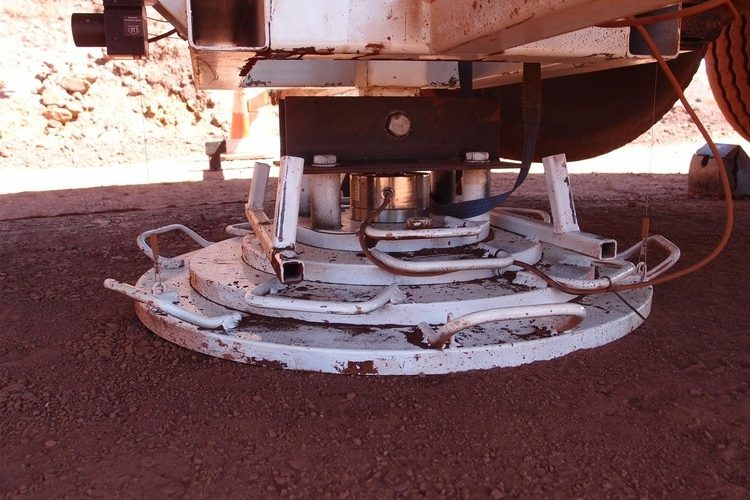
Plate Load Testing
The load carrying capacity and extent to which a soil undergoes settlement under a given load must be known beforehand in order to design a foundation for a structure.
In the field the ultimate bearing capacity and corresponding settlements can be determined with the help of Plate Load Tests.
[/vc_column_text]Read More[/vc_column_inner][/vc_row_inner][/vc_column][vc_column width=”1/2″ css=”.vc_custom_1578745367258{padding-top: 0px !important;padding-right: 0px !important;padding-bottom: 0px !important;padding-left: 0px !important;background-color: rgba(0,0,0,0.04) !important;*background-color: rgb(0,0,0) !important;}”]
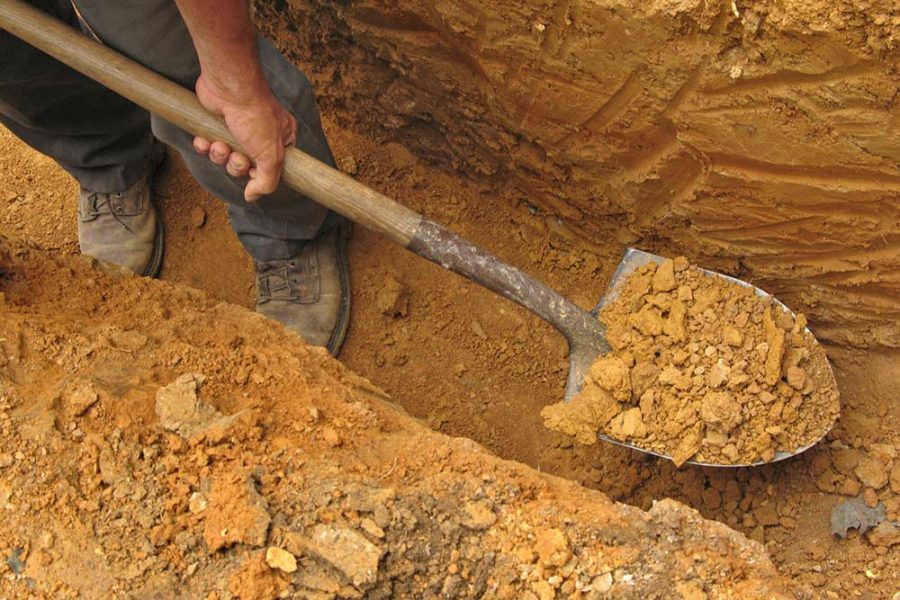
Hand Excavations
Hand Excavated Test Pits allows the geotechnical team to visually assess subsurface conditions presented.
Hand excavation is also used when the use of digging equipment would cause unacceptable damage to the surrounding structures or land, or the work, if done by mechanical digging equipment – such as a backhoe – would present the possibility of a collapse.
[/vc_column_text]Read More[/vc_column_inner][/vc_row_inner][/vc_column][vc_column width=”1/2″ css=”.vc_custom_1624908339880{padding-top: 0px !important;padding-right: 0px !important;padding-bottom: 0px !important;padding-left: 0px !important;background-color: rgba(0,0,0,0.04) !important;*background-color: rgb(0,0,0) !important;}”]
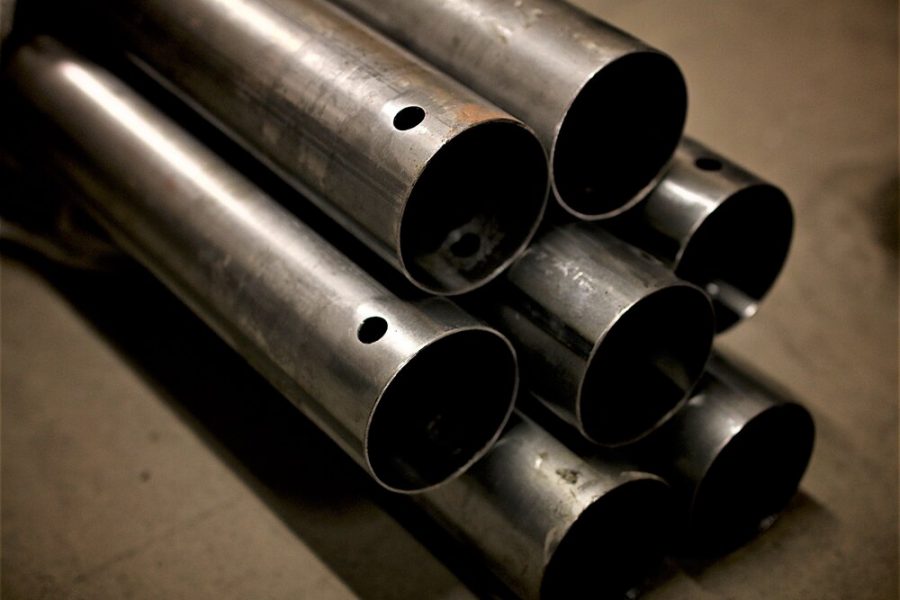
Shelby Sampling
Shelby Tube Sampling methods are used to collect undisturbed samples of soft, fine-grained (cohesive) soils in an effort to recover intact samples which are representative of the in-situ soil density and water content; two factors which are essential for evaluating engineering properties such as the strength, compressibility, permeability, and density of fine-grained soils.
[/vc_column_text]Read More[/vc_column_inner][/vc_row_inner][/vc_column][vc_column width=”1/2″ css=”.vc_custom_1624908355745{padding-top: 0px !important;padding-right: 0px !important;padding-bottom: 0px !important;padding-left: 0px !important;background-color: rgba(0,0,0,0.04) !important;*background-color: rgb(0,0,0) !important;}”]
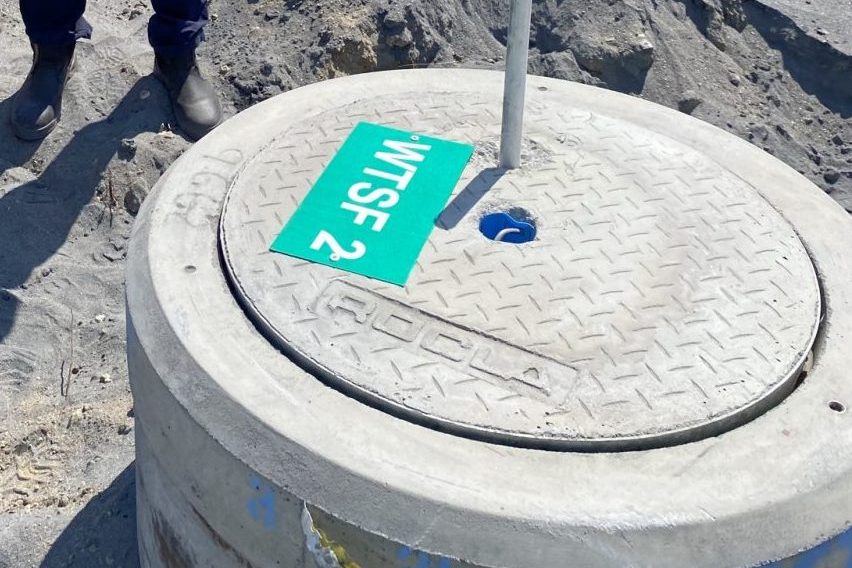
Piezometer Installation
The simplest instrument for measuring pore water pressures in ground is an open standpipe. This is a small (usually 20mm) diameter plastic pipe with a porous section at the bottom. The pipe is installed inside a borehole and the porous section is positioned at the depth where the pore water pressure is to be measured. The annulus between the porous filter and the borehole is filled with sand, the top and bottom surfaces of the sand are sealed with bentonite and the rest of the borehole is filled with a cement/bentonite grout.
The pressure of the ground water pushes water into and up the standpipe until the level of water inside the standpipe (h) is equivalent to the pore water pressure in the ground at the elevation of the porous filter.
[/vc_column_text]Read More[/vc_column_inner][/vc_row_inner][/vc_column][vc_column width=”1/2″][/vc_column][vc_column width=”1/2″][/vc_column][/vc_row]