[vc_row type=”vc_default” css=”.vc_custom_1474268037787{margin-bottom: -30px !important;padding-bottom: 30px !important;}”][vc_column offset=”vc_col-lg-12 vc_col-md-12 vc_col-xs-12″]
[ultimate_heading main_heading=”Shelby Sampling” alignment=”left” spacer=”line_only” spacer_position=”bottom” line_height=”4″ line_color=”” main_heading_font_size=”desktop:26px;” main_heading_line_height=”desktop:36px;” line_width=”50″ spacer_margin=”margin-top:15px;margin-bottom:30px;” el_class=”accent-border-color” main_heading_style=”font-weight:bold;”][/ultimate_heading][vc_column_text css=”.vc_custom_1624968349711{padding-bottom: 60px !important;}”]
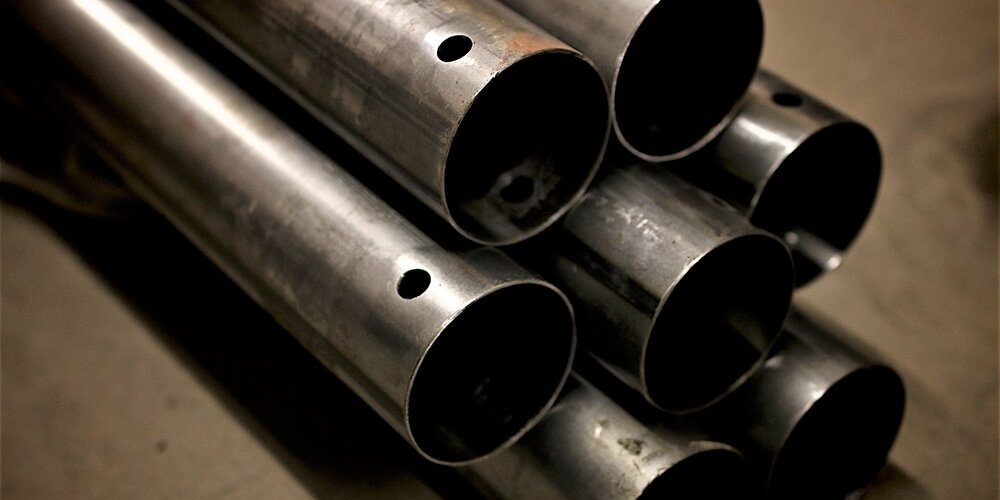
Shelby Tube Sampling methods are used to collect undisturbed samples of soft, fine-grained (cohesive) soils in an effort to recover intact samples which are representative of the in-situ soil density and water content; two factors which are essential for evaluating engineering properties such as the strength, compressibility, permeability, and density of fine-grained soils. Shelby tube samples are typically collected by advancing a thin walled stainless steel tube (determined by clients specification) past the bottom of the advancing drill stem by applying constant downward pressure directly to the drill rod stem using the vertical hydraulic feed system of the drill rig. The sample is subsequently extruded from the Shelby tube using an appropriately-sized hydraulic extruder and extrusion platen.[/vc_column_text][ultimate_heading main_heading=”Additional Information” alignment=”left” spacer=”line_only” spacer_position=”bottom” line_height=”4″ line_color=”” main_heading_font_size=”desktop:26px;” main_heading_line_height=”desktop:36px;” line_width=”50″ spacer_margin=”margin-top:15px;margin-bottom:40px;” el_class=”accent-border-color” main_heading_style=”font-weight:bold;”][/ultimate_heading][vc_accordion active_tab=”false” style=”2″][vc_accordion_tab title=”Advantages of Shelby Samples”][vc_column_text css=”.vc_custom_1624910078104{background-color: #ffffff !important;}”]
[/vc_column_text][/vc_accordion_tab][vc_accordion_tab title=”Disadvantages of Shelby Sampling”][vc_column_text css=”.vc_custom_1624910146359{background-color: #ffffff !important;}”]
- Cannot advance sampler in medium to coarse grained soils or bedrock
- Does not provide quantifiable soil resistance information
- Must be transported and stored to help reduce vibration and other inertial effects; that can alter the condition of the sample prior to testing
- One test per sample tube
[/vc_column_text][/vc_accordion_tab][/vc_accordion][/vc_column][/vc_row]