

[vc_row type=”vc_default” css=”.vc_custom_1474268037787{margin-bottom: -30px !important;padding-bottom: 30px !important;}”][vc_column offset=”vc_col-lg-12 vc_col-md-12 vc_col-xs-12″]
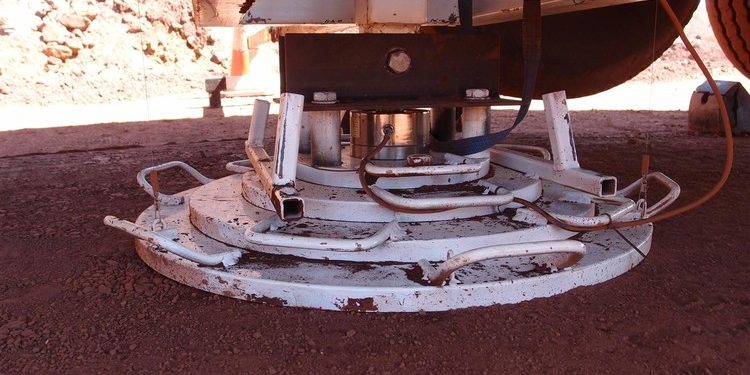
- Used to determine the allowable and ultimate bearing capacity
- Measures the load-deflection relationship
- Suitable for pavement, foundation and temporary works platform investigation.
- Immediate repeatable results so that on-site decisions can be made straight away
[/vc_column_text][/vc_accordion_tab][vc_accordion_tab title=”Plate Load Testing Applications”][vc_column_text css=”.vc_custom_1625054903955{background-color: #ffffff !important;}”]Applications for this non-destructive plate bearing test method for measuring bearing capacity and compaction control include flexible pavements, unsealed roads and mine access roads, tunnels, railway track beds, airport runway and taxiways, hard standing areas, wind farms, building foundations, pipe laying and tank farms.
For example, the Plate Load Test is used to determine whether the ground has sufficient bearing capacity to support a given structure such as temporary pads for crane outriggers or piling rigs. It is very useful for mobile crane operators and piling rig contractors to check potential settlement of crane pads or mats under full load before the mobile crane or piling rig is sited or when traversing the site. The results of a Plate Load Test will enable you to calculate the size of outrigger spreader plates or mats required, and the ground movement that can be expected.
We also have clients who require bearing capacity data but no penetration is allowed because of services e.g. on railway track beds.
Clients include those involved in pavement construction, pavement rehabilitation, material testing, geotechnical testing and site investigations , councils, asset managers, mines, engineering and construction groups, mobile crane operators and piling rig contractors, geotechnical consultancies and research organisations.[/vc_column_text][/vc_accordion_tab][vc_accordion_tab title=”Advantages of Plate Load Testing”][vc_column_text css=”.vc_custom_1625054925501{background-color: #ffffff !important;}”]The advantages of a Plate Load Test include:
- Shorts Operation Time
- Cost Effective
- Improved Safety
- Accurate and Repeatable
- Non-Destructive
[/vc_column_text][/vc_accordion_tab][/vc_accordion][/vc_column][/vc_row]